Fiberglass Insulation Contractor in Statesboro, GA
From new residential construction stud framing to garage partitions and room addition remodels, Coastal Synergy provides precision-cut, high-density fiberglass batt installations that meet Georgia’s stringent IECC building energy codes.
Why Precision Fiberglass Batt Installation Matters
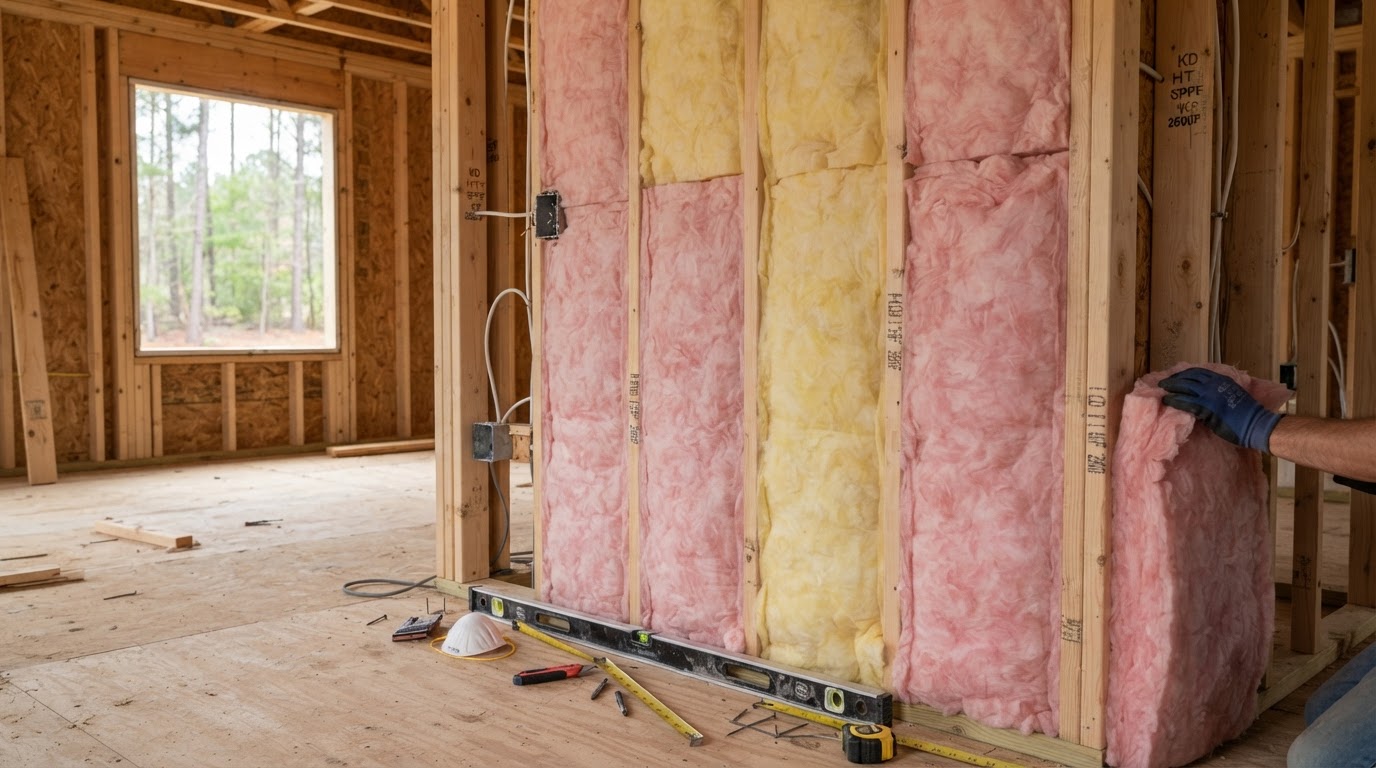
Fiberglass remains one of America’s most popular insulation choices due to its affordability, non-combustible glass mineral composition, and excellent acoustic dampening. However, its effectiveness depends entirely on installation precision. A mere 5% gap or compression fold in a fiberglass batt assembly can drop its rated R-value by more than 30%.
At Coastal Synergy, Carlos Martinez trains our technicians to friction-fit batts tight against top and bottom plates, carefully notch around electrical junction boxes and wiring runs, and avoid excessive compression. Whether you require kraft-faced moisture vapor retarders or unfaced batts for interior acoustic dampening, our installations ensure consistent thermal performance across your entire structure.
Key Advantages of Modern Fiberglass Batts
Natural Fire Resistance
Made from sand and recycled glass, fiberglass fibers are inherently non-combustible and carry a Class A fire rating.
Acoustic Sound Dampening
Exceptional noise reduction for home theaters, laundry rooms, bathrooms, and between multi-family shared walls.
Formaldehyde-Free Products
We use low-dust, bio-based binder formulations that safeguard your home’s indoor air quality.
Rapid Turnaround
Fast, clean installations that keep your framing and drywall trades right on schedule.
Frequently Asked Questions About Fiberglass in Georgia
What R-value is required for walls and attics in Statesboro, GA?
Statesboro falls in Climate Zone 3. Standard residential building codes generally call for R-13 to R-15 in 2x4 exterior walls, R-19 to R-21 in 2x6 walls, and R-38 in attic floors. We verify your exact local Effingham, Bulloch, or Chatham County requirements before installation.
Should I choose faced or unfaced fiberglass batts?
Faced fiberglass includes a kraft paper backing with asphalt adhesive that acts as a vapor barrier; this is typically installed facing inward in exterior walls. Unfaced fiberglass is used when another vapor barrier exists, when topping existing insulation in attics, or for interior sound-isolation walls.
Explore Related Services:
Get a Fiberglass Quote
Accurate square-foot pricing from Carlos Martinez. Upfront and honest — no obligation.
Quality Guarantee
Zero gaps, precision cutting around wiring & pipes, and 100% building code compliance on every single stud bay.